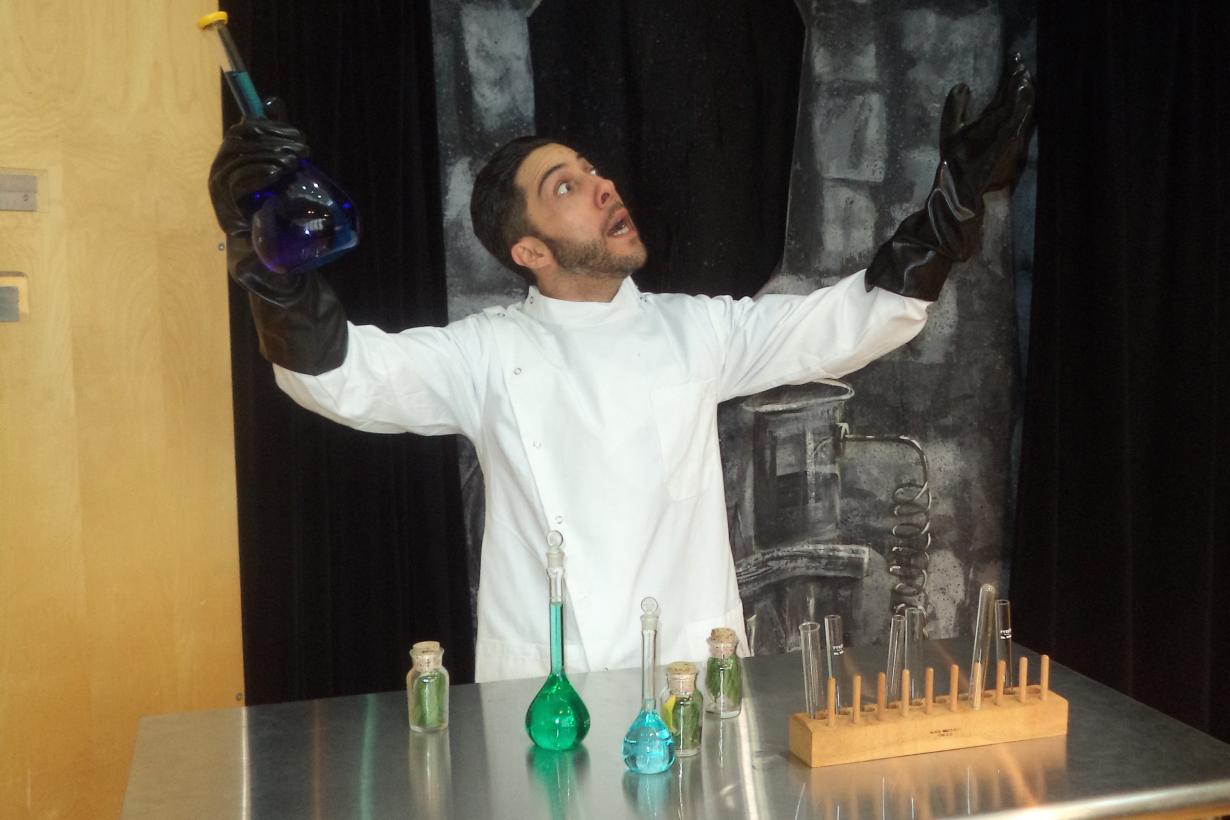
Our NISE Net partners at the Fort Worth Museum of Science and History recently organized a number of events with Yale materials scientist and NISE Net advisor Ainissa Ramirez as part of their “Cool Science Week.”
We scientists and innovators should just accept the idea that when it comes to new and emerging technologies that at some point along the way we are going to “cock it up.” The public knows it will happen and we can build a more trusting relationship with the public if we fess up to it in advance. This is one idea expressed today at a conference organized by Andrew Maynard at the University of Michigan.
The National Science Foundation has asked CAISE (Center for the Advancement of Informal Science Education) to explore creating a focus on networks at it's PI Summit in the spring. CAISE is using the ASTC session that NISE Net Manager Vrylena Olney proposed, with me as moderator, as a jumping off point for their planning their network strand, along with a meeting in DC in November.
Dozens of children participated in the second annual Nano Piccola event in Gagliato, Italy, in July, which gave kids a chance to learn about nanotechnology and nanomedicine through hands-on activities and (little) talks by researchers from The Methodist Hospital Research Institute (TMHRI) in Houston, USA. TMHRI also held an event in Houston as part of the Gagliato. (watch video).

The "Horton Senses Something Small" activity
In 2008, Dennis Clougherty, a physics professor at the University of Vermont, called up nearby ECHO Lake Aquarium and Science Center to see if they’d be interested in working together to host a NanoDays event. In the three years since, ECHO and UVM have developed an ongoing partnership.
What’s a Mini-Grant?
The NISE Network is making available a limited number of small, one-time awards to support initiatives by NISE Net partners to engage their local audiences in nanoscale science, engineering, and technology topics. Requests can be made for an award up to $3,000 dollars to fund a small project or be put towards a larger endeavor.
Program Overview
The Program Overview gives basic program info as well as examples of applicable projects.
What do 17th-century Japanese literature and a science summer camp in Syracuse, NY have in common? Haiku!
The Milton J. Rubenstein Museum of Science and Technology (MOST) in Syracuse, New York has been working to incorporate nano content into their ongoing summer camp program. As part of that effort, they’re using the haikus from the Nano Bite newsletter to spark discussions about science content.
Science museums and their audiences often benefit from sub-awards provided by research centers which choose to address the NSF Broader Impact Criterion through partnerships for education outreach. Therefore, the National Science Board’s current review of this criterion (commonly known as “BIC”) alongside its companion criterion “Intellectual Merit,” is of particular interest to the science museum and entire informal science education community.
NanoDays